

What a Vacuum Is Actually Designed to Do
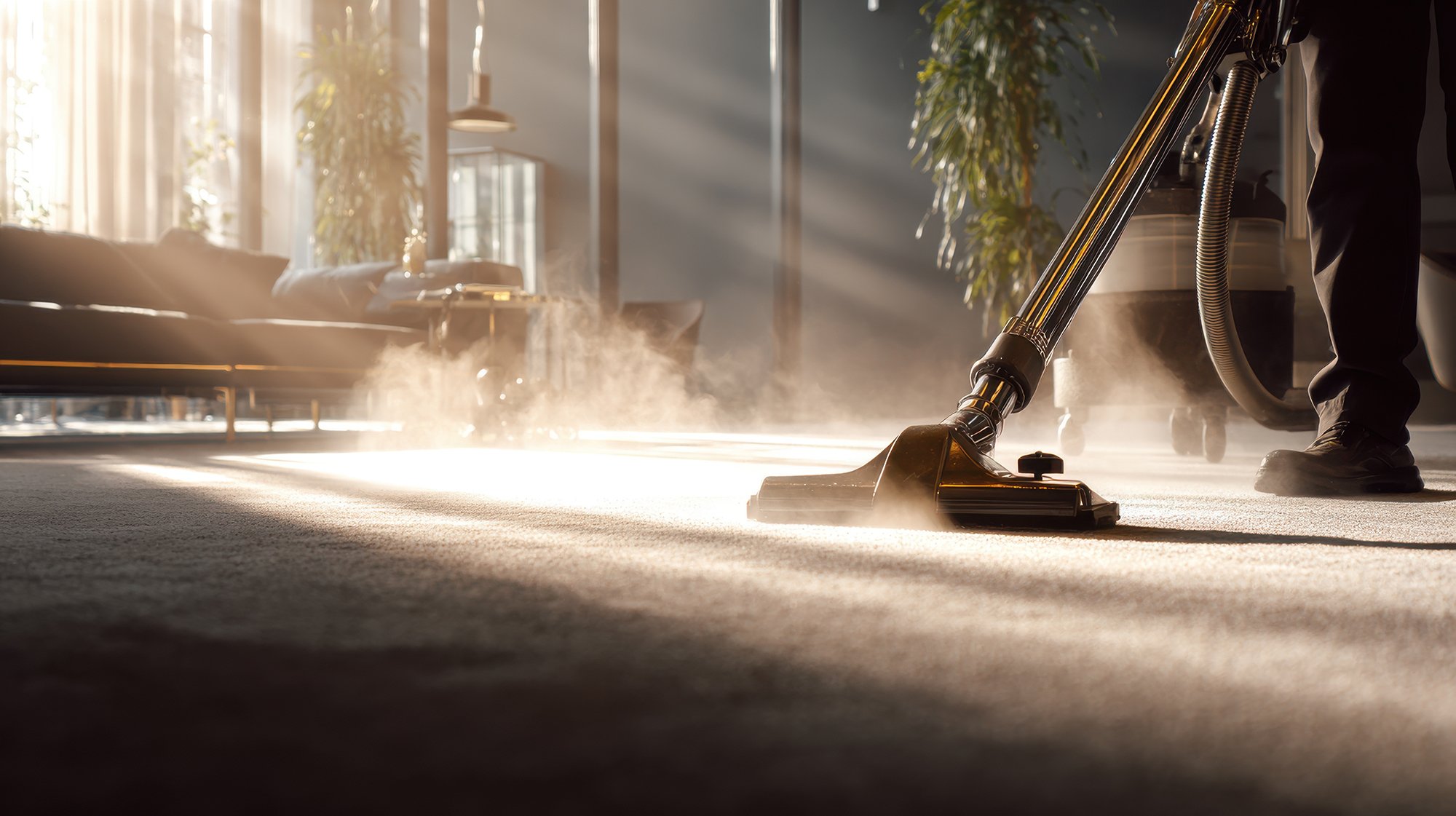
A vacuum works on loose dry soil using two forces, agitation from the beater bar to shake particles free of the fiber, and airflow to carry them away. Within that job it is genuinely effective, and a good vacuum used regularly removes a substantial share of what lands on a carpet day to day. Nothing below is a criticism of vacuuming.
The limitation is simply what those two forces can act on. Airflow moves particles that are free to move. Agitation loosens particles held lightly in the pile. Neither force does anything to soil that is chemically bonded to the fiber or physically wedged below the reach of the airflow. That is not a flaw in the machine, it is the boundary of what suction can physically achieve.
The Oily Film That Airflow Cannot Lift
Every home generates airborne oils. Cooking releases fine aerosolised grease that travels well beyond the kitchen, skin and hair oils transfer through socks and bare feet, and outdoor pollutants carry their own oily component indoors. All of it settles on carpet fiber and forms a very thin, tacky film that bonds to the surface of each strand.
That film does two things. It dulls the carpet, which is why a floor can look flat and tired immediately after being vacuumed, since the dullness was never loose dirt to begin with. It also acts as an adhesive, holding dry soil against the fiber so that the next vacuum pass cannot lift it. Breaking an oily bond requires a cleaning agent and heat, and no amount of suction substitutes for that chemistry.
The Grit That Settles at the Base of the Pile
Gravity and foot traffic drive soil downward. Every step pushes particles a little further into the pile until the heavier, coarser material collects right at the base, where the fiber meets the backing. Most household vacuums pull effectively from the upper portion of the pile and lose meaningful suction the deeper into the structure you go.
The result is a layer of dry grit sitting at the bottom of the carpet, largely out of reach, in the exact spot where the fiber is anchored and most vulnerable. This soil is invisible from above, which is why a carpet can look perfectly acceptable while carrying a significant load beneath the surface. Appearance and actual soil level drift apart over time.
Why That Deep Grit Is the Part That Shortens Carpet Life
Here is the part that rarely gets explained properly. Soil at the base of the pile is mostly mineral, which means it is hard and angular, essentially fine sand. Every time someone walks across the carpet, the fibers flex and rub against those particles. The grit acts like very fine sandpaper working against the fiber from the inside, hundreds of times a day in a busy walkway.
That abrasion is what causes fibers to fray, lose their twist, and mat down permanently. So the soil a vacuum cannot reach is precisely the soil doing the structural damage. This reframes professional cleaning fairly significantly. It is not primarily about making the carpet look better, although it does that too. It is about removing the abrasive that is quietly wearing the carpet out.
Why Vacuuming Still Matters Just as Much
None of this makes regular vacuuming optional. It is the single most effective thing a household can do between professional visits, because every particle removed while it is still loose at the surface is a particle that never works its way down to the base where it starts causing damage. Frequent vacuuming genuinely slows the rate at which that deep layer builds up.
The two also work better together than either does alone. A carpet vacuumed thoroughly before a professional visit lets the extraction concentrate on bonded and embedded soil rather than spending its capacity on loose material that suction would have handled. Treating them as a partnership rather than alternatives produces a noticeably better result.
Building a Routine That Covers Both
A sensible approach is consistent vacuuming to manage surface and mid pile soil, paired with periodic professional extraction to address the oily film and the grit at the base before it accumulates enough to cause visible wear. How often that second part is needed depends on traffic, pets, and how much soil gets tracked in, which varies a great deal between households.
Carpet Spectrum can assess where a carpet actually sits on that scale rather than applying a blanket schedule, since a quiet household and a busy family home genuinely do not need the same cadence.
If you want to know what your carpet is carrying below the surface, contact us to arrange a visit. Carpet Spectrum serves Southaven, MS and Memphis, TN from Southaven, MS or Memphis, TN, with carpet cleaning that reaches the soil a vacuum was never built to handle.


